Troubling But Necessary
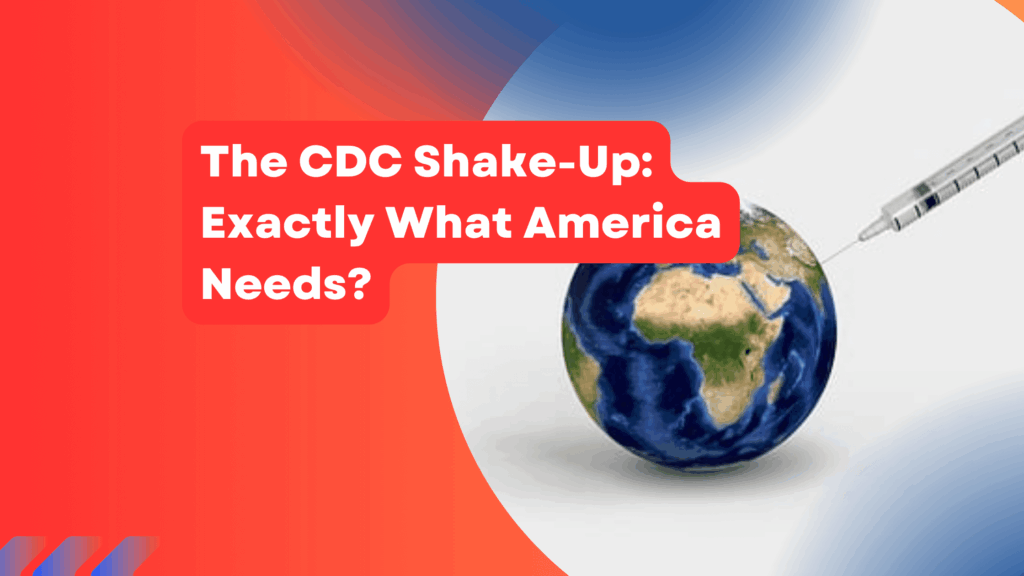
Let’s be honest: a wave of firings, resignations, and even walkouts at the CDC feels destabilizing.
Public health shouldn’t look like a political drama.
Yet maybe the turmoil is revealing something deeper — that America’s leading health agency is overdue for a hard reset.
The uncomfortable truth is that many insiders don’t seem willing to admit that the system is broken, and the public doesn’t fully trust the CDC anymore.
That raises the question: if things aren’t working, maybe disruption isn’t the problem — maybe it’s the start of the solution.
RFK Jr.’s Bigger Vision: Renewed Focus on Chronic Health
At the core of Robert F. Kennedy Jr.’s leadership is a shift that sounds almost obvious: focus on chronic disease and prevention instead of pouring endless billions into reactive treatments.
Because everything you ingest affects your body and takes it further away from nature.
His “MAHA” agenda — Make America Healthy Again — argues that the country’s true health crisis isn’t just pandemics or viruses. It’s the daily toll of heart disease, diabetes, obesity, cancer, and mental health struggles.
Yet despite chronic disease driving 86% of U.S. healthcare costs and affecting nearly half the population, the CDC devotes only a sliver of its budget to prevention programs. For example, just 1.9% of its budget goes to cardiovascular disease prevention — even though heart disease is the nation’s number one killer.
Meanwhile, federal public health spending as a whole makes up just 3% of U.S. healthcare dollars.
If that isn’t imbalance, what is?
Looking Abroad: Europe’s Prevention Model
The U.S. spends nearly 18% of GDP on healthcare — far more than Europe.
Yet life expectancy is lower, and avoidable deaths are higher.
Why?
Because much of America’s spending props up treatment plans while Europeans invest more in keeping people healthy in the first place.
In fact, if U.S. disease rates mirrored Europe’s, we could cut per-capita health costs among older Americans by 17%, saving around $220 billion a year.
RFK Jr.’s vision aligns more with these outcomes than with the status quo in Washington.
Why the Pushback?
Of course, Kennedy is no stranger to controversy.
Critics frame him as anti-science or conspiratorial, but that itself speaks volumes.
Too often, questioning entrenched models is treated as a threat — not a contribution.
The pharmaceutical industry, powerful lobbies, and bureaucracies thrive in a system that rewards treatment over prevention.
So maybe the flood of criticism aimed at Kennedy isn’t about science at all. Maybe it’s about protecting a power structure that doesn’t want to change.
Rethinking the Purge
So, is the CDC purge good for America?
- Yes, because it opens the door to a long-overdue shift — toward prevention, better chronic health, and a system that actually addresses the root causes of disease.
- Troubling, because it shows how deeply many inside the agency resist that shift. If so many professionals inside the CDC can’t see why public trust has eroded, that’s a problem in itself.
The Hopeful Takeaway
What looks like chaos may actually be an inflection point.
The CDC, long a fortress of conventional thinking influenced by powerful lobbies, may finally be forced to evolve.
And maybe this moment isn’t about RFK Jr. himself.
Rather, it’s about whether America is ready to stop settling for “sick care” and start demanding real health.