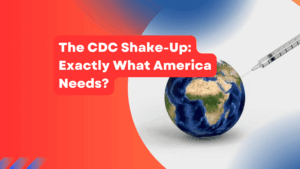
The U.S. Centers for Disease Control and Prevention (CDC) is facing a crisis of trust.
Despite its recommendation that all Americans stay current with COVID-19 boosters, only about 10% of children and 15% of adults have complied.
That stark gap between official guidance and public behavior highlights the real challenge: rules and recommendations mean little if people no longer trust the messenger.
When Florida’s Surgeon General emphasized that vaccines should remain recommended but not mandated, critics accused him of being “anti-science.” But the reality is more nuanced: there is more than one credible way to promote public health.
And in fact, some of the world’s most advanced nations—including the UK, Sweden, and Denmark—follow a voluntary model that relies on education and trust rather than coercion.
Lessons From Abroad
Contrary to the notion that mandates are the hallmark of a responsible health system, many Western countries do not legally compel vaccination.
-
In the United Kingdom, no vaccines are mandated for school entry. The NHS provides them free, but parents decide.
-
Sweden and Denmark similarly recommend but do not require vaccines, with uptake staying high because people trust their public health systems.
-
By contrast, Germany requires measles vaccination for school attendance, while Italy and France have at times mandated multiple childhood vaccines.
These examples show that optional vaccination with strong uptake is possible—if citizens trust both the science and the institutions delivering it.
Why Education Matters More Than Compulsion
The backlash against COVID-19 mandates revealed a key truth: coercion can undermine trust. Many parents and adults who might otherwise have vaccinated resisted precisely because they felt their autonomy was being stripped away.
Even science itself evolves. Take COVID-19 boosters: what was considered essential in 2021 has shifted as new variants, improved immunity, and updated data changed the risk–benefit profile. When science changes, rigid mandates can appear arbitrary, while education keeps the public engaged in the process.
Or look at Hep-B vaccination. In the U.S., it is administered universally to newborns, even without first testing the mother for infection. Advocates say this closes gaps and makes it easier; critics argue it oversimplifies and injects people who don’t need it.
Either way, it shows how complex vaccine policy can be—and why clear education & explanations matter more than blanket rules.
Striking a Balance
Mandates can make sense in emergencies—such as during outbreaks of measles or polio—but in ordinary times, trust and education deliver stronger long-term results.
Florida’s proposed model is not “anti-science”; it is aligned with countries that prove voluntary systems work when paired with honest communication.
In practice:
-
Mandates guarantee compliance but risk backlash because they may go against people’s health.
-
Education and voluntary systems preserve trust, encourage dialogue, and often achieve high uptake without coercion.
Both are legitimate tools. But only one builds the durable trust that the CDC desperately needs to restore.
The Way Forward
If America wants to repair the public’s fractured confidence in vaccines, it must:
-
Invest in transparent, accessible education campaigns.
-
Level with the public about uncertainties and evolving science.
-
Respect parental and personal choice, while keeping vaccines free and convenient.
The better people are informed, the more they will choose vaccination on their own.
That is not anti-science. It is science paired with trust—something America needs now more than ever. The act of asking questions is pro-science. Shutting down dissent is anti-science.