In recent months, media outlets and online commentators have painted a dire picture of U.S. military operations in the Caribbean, particularly off the coast of Venezuela. Sensational headlines scream of “random bombings” of boats, “extrajudicial killings,” and an escalating “war” that’s out of control.
But a closer examination of the facts reveals that these are precision strikes against intelligence-verified threats from narco-terrorists smuggling deadly drugs into America. They are not baseless aggression but are rooted in evidence, authorized by longstanding presidential powers, and a direct response to a crisis that is claiming tens of thousands of American lives annually.
Evidence-Driven Strikes, Not Random Bombings
The US operations, launched in September 2025, are not knee-jerk reactions. Each strike follows rigorous intelligence gathering by U.S. Southern Command (SOUTHCOM), the DEA, and allies like Colombia. (Reuters)
According to AP News, targets were confirmed narco-traffickers using known smuggling routes. (AP News)
Key confirmed operations:
-
September 2, 2025: Strike sank a Venezuelan-originated vessel in international waters, killing 11 Tren de Aragua members linked to smuggling.
-
September 15: Second strike killed three cartel affiliates; recordings confirmed narco activity.
-
October 3: Defense Secretary Pete Hegseth reported a strike killing four, based on verified narcotics intelligence.
-
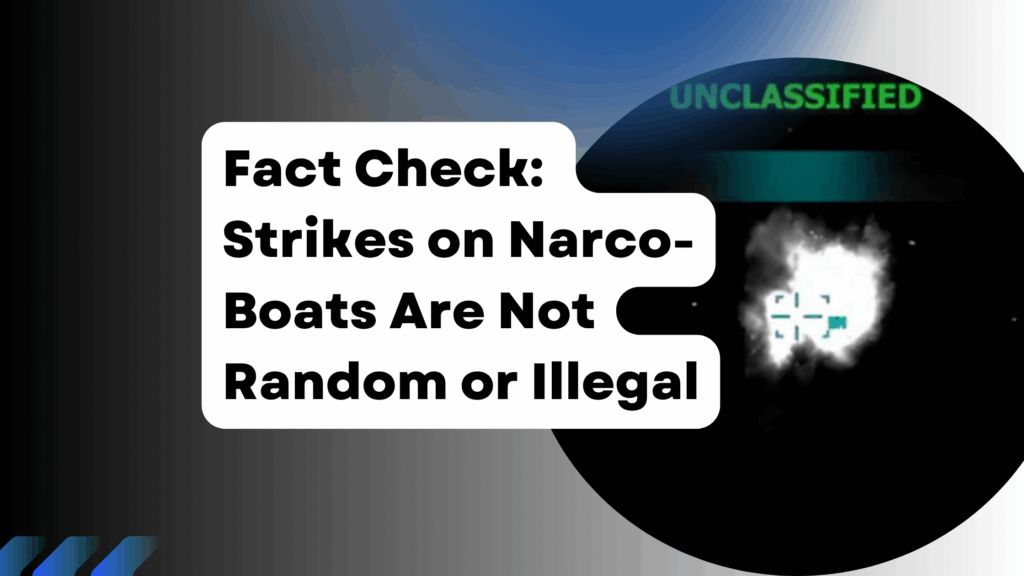
October 14: Six killed on a submersible vessel; Trump released verified video footage showing the strike.
By mid-October, over 27 threats had been neutralized. Survivors from one strike were captured and held as criminal suspects, not “prisoners of war.”
Reuters verified strike videos using AI tools, confirming no manipulation. While some journalists demand “public proof,” operational security limits disclosures. These are not random attacks – they are intelligence-based interdictions against confirmed narco-terrorist activity.
In a partisan fashion, Partisan Human Rights Watch has labeled them without evidence to be “extrajudicial,” but under U.S. law, these are lawful self-defense actions against armed non-state actors.
This is a precision interdiction campaign, supported by destroyers, F-35s, and 6,500 troops – part of a broader U.S. response to Venezuela’s state-sponsored narcotics network under Maduro.
Submarines are Narco-Subs: Submersible Threats
The vessels targeted aren’t innocent fishing boats or random speedboats – they’re sophisticated “narco-subs,” custom-built by drug cartels for evading detection while hauling massive cocaine loads toward U.S. shores.
(Reuters)
Commonly referred to as submarines in military and law enforcement circles, many are fully submersible, capable of diving up to 30 feet or more underwater to dodge radar and patrols.
(AFCEA International)
Examples include:
-
2010 (Ecuador): A 98-foot diesel-electric submarine with periscope and air conditioning, built in a jungle for trans-oceanic smuggling.
(DEA Press Release) -
2010 (Colombia): A 100-foot fiberglass sub carrying up to eight tons of cocaine – enough to flood U.S. streets with poison.
(U.S. Southern Command / Colombian Navy Report) -
2023 (AFCEA Report): Battery-powered craft now cross the Atlantic carrying 3–8 tons per trip, at under $1 million each.
(AFCEA International Report)
These are not myths; they’re documented tools of transnational crime, often linked to groups like Venezuela’s Tren de Aragua, now a U.S.-designated terrorist organization. Calling them “boats” downplays their lethality – feeding a false narrative of indiscriminate attacks.
Presidential Authority: Clear Precedence with Obama, Bush, Clinton
Media critics call these strikes an “authoritarian overreach.” That’s false.
Under Article II of the Constitution, the President has authority as Commander-in-Chief to defend against imminent threats, including foreign terrorist organizations (FTOs). A classified Justice Department opinion affirms that lethal force against FTO-affiliated traffickers constitutes self-defense, not warfare.
This mirrors precedent:
-
1989: President George H.W. Bush authorized the Panama invasion to capture drug-indicted dictator Manuel Noriega. (AP News)
-
Obama Era: Drone strikes targeted FARC-linked drug labs in Colombia, dismantling narco-terror infrastructure. (Reuters)
President Obama’s administration conducted 540+ precision drone strikes globally, many on similar grounds of protecting U.S. national security.
Trump’s adaptation of that model – targeting fentanyl and cocaine routes – follows bipartisan precedent.
While some lawmakers question escalation, the War Powers Resolution permits 60-day operations without congressional approval, a power used by both parties for decades.
The Human Cost: Why These Strikes Matter
At the core of this debate are American lives.
Drugs trafficked through these routes – especially fentanyl-laced cocaine – drive an epidemic that has devastated families across the nation.
In the last 5 years these drugs have cost almost a million lives.
Each narco-sub stopped prevents tons of deadly cargo from reaching U.S. communities. Every ton interdicted can represent thousands of lives saved.
Venezuela’s Tren de Aragua and its regime backers have turned trafficking into a state enterprise. U.S. strikes target that supply chain directly.
Cutting Through the Noise
Baseless accusations of “random bombings” or “unprovoked strikes” is partisan media propaganda that emboldens cartels.
The reality is clear: these are evidence-based, legally authorized operations under the same constitutional framework used by multiple presidents – Democrat and Republican alike.
With overdose deaths still exceeding the Vietnam War’s toll each year, these missions are not reckless; they’re a necessary defense against narco-terrorism.
The real scandal isn’t U.S. interdiction efforts. It’s the human cost of inaction.
✅ Fact Check Summary
-
Claim: U.S. is randomly bombing Venezuelan boats.
-
Verdict: ❌ False. Strikes target confirmed narco-subs tied to FTOs.
-
Basis: Verified intelligence, legal presidential authority, and precedents under both parties.
-
Impact: Disrupts transnational drug pipelines, saving American lives.