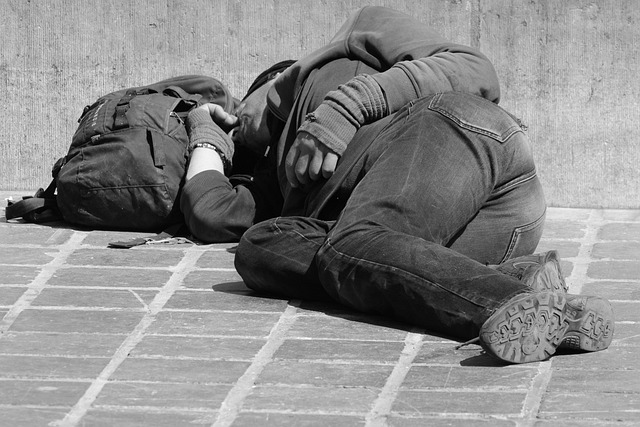
Homelessness is a growing issue in American cities, but it’s not just about not having a home. For many, it’s about deeper struggles that keep them on the streets.
~75% of homeless individuals suffer from mental illness or addiction. As a result they struggle to maintain jobs or family ties due to their conditions:
- Mental Illness: Severe disorders (e.g., schizophrenia, bipolar disorder, affecting 25-30%) can impair cognitive function, emotional stability, and social interactions, making consistent employment or family relationships difficult. For example, 60-70% of those with severe mental illness report job loss due to symptoms (SAMHSA, 2023).
- Addiction: Substance use disorders (30-46% of homeless) lead to erratic behavior, absenteeism, or legal issues, which employers often won’t tolerate. About 50% of addicted homeless report losing jobs due to drug or alcohol use (National Low Income Housing Coalition, 2023).
- Family Breakdown: Mental illness and addiction strain relationships, leading to isolation. Around 40% of homeless with these conditions report family estrangement, often due to behavior linked to untreated issues (HUD, 2023).
While economic factors like high rent can exacerbate their situation, the core issue for this group is often their inability to function in structured settings like workplaces or households.
This makes them more likely to remain unsheltered, avoid shelters (60-70% of shelter-avoiders have these issues).
Let’s dive into who the homeless are, why they’re on the streets, and why simply handing out housing won’t fix the problem.
Homelessness: More Than a Housing Problem
About 580,000 Americans are homeless on any given night (HUD, 2023). They fall into two main groups:
- 75-80% have mental illness or addiction: Around 25-30% have severe mental disorders (like schizophrenia or bipolar disorder), 30-46% struggle with alcohol or drug addiction, and up to 50% have both. These conditions make it hard to hold jobs or maintain family ties, keeping them on the streets longer.
- 20-25% are neither mentally ill nor addicted: This group faces economic challenges like job loss, unaffordable rent, or domestic violence. They’re more likely to use shelters or live in cars and exit homelessness faster (often within 1-6 months).
Why Are People on the Streets?
For the 20-25% without mental illness or addiction, homelessness is often a temporary setback driven by:
- Economic Hardship: Sudden job loss, death of the main earner etc – over 50% of urban homeless cite unaffordable housing as their main issue.
- Housing Shortages: Over 1 million households are stuck on public housing waitlists.
- Life Disruptions:
- Domestic violence (10% of cases)
- aging out of foster care (20% of foster youth become homeless),
- Post-incarceration struggles push people onto the streets.
For the 75% with mental illness or addiction, the story is different. Economic hardship isn’t their main problem—it’s their inability to function in jobs or families.
- Mental disorders disrupt focus and behavior, with 60-70% losing jobs due to symptoms.
- Addiction leads to absenteeism or legal troubles, with 50% reporting job loss tied to substance use.
- Family ties break down too—40% are estranged due to untreated issues.
This group often avoids shelters (60-70% of shelter-avoiders have these conditions), preferring encampments where they face fewer restrictions.
How Do They Survive?
The 20-25% without chronic conditions rely on:
- Shelters: Most used. Emergency shelters provide beds, food, and bathrooms, but only 350,000 beds exist nationwide.
- Vehicles: About 10% live in cars, a less visible option.
- Public Spaces: Least used in emergencies. Libraries or transit hubs offer warmth and restrooms, though access is limited.
The 75% with mental illness or addiction, often avoiding shelters, turn to:
- Encampments: Live in tents or makeshift camps, which are targeted by city sweeps
- Improvisation: use public restrooms, businesses, or open spaces for hygiene, often inconsistently
- Outreach: Warming centers or donated blankets help in cold weather, but only 10-15% get regular aid
Why Housing Initiatives Alone Create a Moral Hazard
Current “Housing First” policies, funded by HUD, give homes without requiring sobriety or treatment.
While this helps some (30% exit shelters within a month), it risks enabling a cycle of dependency.
Simply providing homes creates a moral hazard. Service providers profit from housing contracts without addressing why 75% of the homeless can’t hold jobs or stay with family – mental illness and addiction.
With the current housing first policy, there’s little incentive to tackle the root causes, leaving many stuck on the streets or cycling back.
We Need Direct Intervention
Homelessness demands more than a roof.
For the 20-25% facing economic barriers, affordable housing and job support are key.
But for the 75% with mental illness or addiction, we need bold steps:
- treatment
- rehabilitation
Way Forward: Target the Core Issues
President Trump’s July 2025 executive order shifts how we address homelessness:
- Focuses on Public Spaces: It targets encampments, loitering, and public drug use, primarily aimed to help the 75% with mental illness or addiction, who make up most of the unsheltered population.
- Prioritizes Treatment: Funds are redirected from housing programs to mandatory treatment and rehabilitation centers.
- Empowers Cities: Building on a 2024 Supreme Court ruling allowing bans on public sleeping, it supports local enforcement of anti-camping laws.
This order does NOT focus on those in shelters or cars, who are often the 20-25% facing economic barriers.
Instead, the order aims to mitigate chronic homelessness, driven by mental illness and addiction.