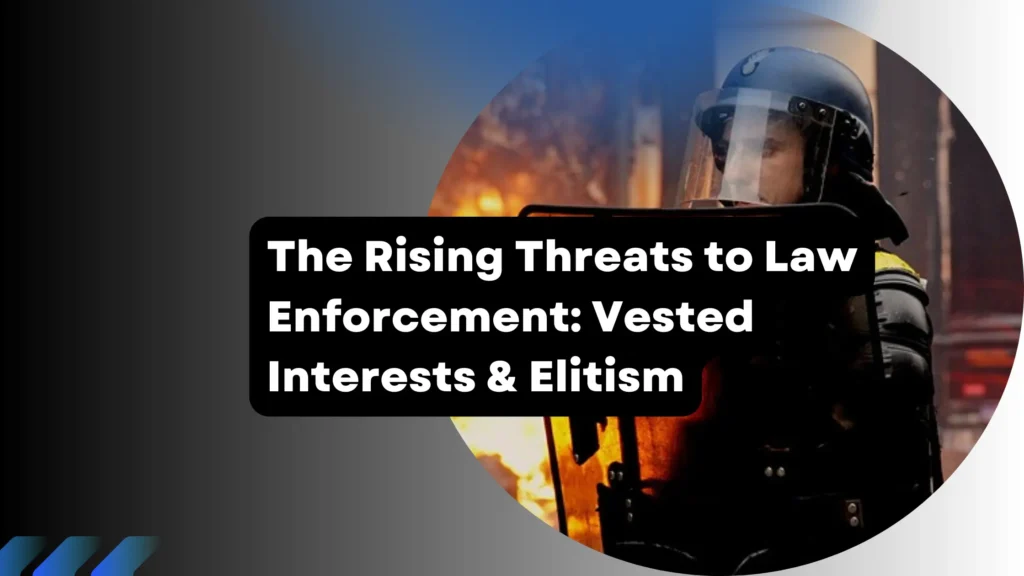
In recent years, U.S. Immigration and Customs Enforcement (ICE) and the Bureau of Alcohol, Tobacco, Firearms and Explosives (ATF) have faced unprecedented challenges in carrying out their mandates to enforce federal laws, particularly those related to immigration and public safety.
Reports indicate an alarming 830 percent increase in assaults on ICE officials from January 21 to July 14, 2025, compared to the same period in 2024.
This escalation, coupled with local policies and societal attitudes that undermine federal law enforcement efforts, raises critical questions about the vested interests driving opposition to agencies like ICE and ATF.
These agencies, tasked with removing illegal immigrants and criminals from American streets, are increasingly endangered by a combination of political agendas, elitism, and selective application of the law.
A Surge in Violence Against Federal Agents
The Department of Homeland Security (DHS) has reported a staggering rise in assaults against ICE officers.
In Portland, Oregon, Antifa-affiliated groups and other activists have engaged in doxxing campaigns, posting personal information of ICE officers, including their names, addresses, and details about their families.
Flyers threatening officers with phrases like “NO PEACE FOR ICE” and “CHINGA LA MIGRA” have appeared in neighborhoods, putting agents and their loved ones at risk from sophisticated criminal organizations like MS-13 and Tren de Aragua.
To protect themselves, ICE agents have resorted to wearing masks during operations, underscoring the heightened dangers they face, as they must shield their identities to avoid retaliation.
Inflammatory rhetoric from media and politicians only deepens this climate of hostility.
Sanctuary Policies and Local Resistance
One of the most significant obstacles to ICE’s mission is the refusal of some local governments to cooperate with federal immigration enforcement.
Sanctuary cities such as Chicago, New York City, and Boston have policies that prohibit local police from assisting ICE in detaining immigrants, even those with criminal records.
-
In Chicago, Mayor Brandon Johnson has publicly stated that Chicago police will not be involved in ICE operations.
-
In Massachusetts, a 2017 state supreme court ruling banned law enforcement from holding individuals solely on ICE detainer requests, while Boston further restricts cooperation.
This resistance often forces ICE to conduct community-based arrests—at worksites, on the streets, or even in immigration courts—sparking protests and tension. In contrast, states that cooperate with ICE typically limit arrests to jails and prisons, targeting individuals already in custody for crimes.
Political leaders have even been arrested during anti-ICE protests, framing their actions as moral opposition. Yet, ICE reports show that more than half of individuals arrested in Massachusetts during recent operations had serious criminal convictions, including rape, murder, and drug trafficking.
Funding Sources, Vested Interests, and Political Agendas
The real story behind immigration enforcement isn’t just about laws or budgets—it’s about the vested interests that thrive on chaos and confrontation.
These interests fuel division, make communities less safe, and ultimately force taxpayers to foot the bill for government responses like Trump’s record-breaking immigration budget.
Activist groups and political operatives have built well-funded networks that:
-
Hire fake crowds and paid demonstrators to stage protests against ICE operations, ensuring constant media coverage and public outrage.
-
Fund bail programs that quickly release offenders—including repeat agitators and violent offenders—so they can return to the streets and continue destabilizing communities.
-
Channel foundation money and private donations into lobbying campaigns, lawsuits, and “sanctuary city” initiatives that block cooperation with federal law enforcement.
Many non-profits frame these efforts as humanitarian, but they also reap millions in grants and donor contributions tied directly to opposing law enforcement.
Their advocacy helps create the very conditions that demand bigger federal crackdowns.
Activist-aligned nonprofits and legal networks receive funding tied to opposing ICE. This creates a self-perpetuating cycle—vested interests drive instability, which fuels outrage, which leads to ballooning government budgets.
Elitism and the Disconnect in Affluent Communities
Opposition to ICE often emerges most strongly in affluent urban enclaves. Leaders have often called for ICE’s abolition, accusing the agency of “kidnapping” and “cruelty.”
This rhetoric contrasts with the realities on the ground: in one Massachusetts operation, 790 of the 1,461 detainees had significant criminal convictions. Yet critics highlight the smaller number of non-criminal detainees to cast ICE as indiscriminate and abusive.
Meanwhile, rural and working-class communities—often more directly impacted by crimes tied to illegal immigration—tend to support enforcement while still pushing for balance and fairness.
The Rule of Law and Selective Enforcement
The central question remains: Can the law be selectively applied?
ICE and ATF operations are designed to remove individuals violating federal law. Recent examples include:
-
A Savannah, Georgia operation that detained 475 people for unlawful employment practices and other federal crimes.
-
ATF agents being deployed to assist with immigration enforcement as part of an “all-hands-on-deck” strategy.
Yet, when local officials refuse to cooperate, ICE is pushed into conducting more visible—and controversial—community raids risking more danger to their lives.
Laws Cannot Be Selectively Applied
The rise in violence against federal agents, combined with sanctuary resistance and elitist opposition, underscores a troubling trend: law enforcement is being undermined by political and financial interests.
While advocacy groups and progressive politicians push for sanctuary protections, they often ignore ICE’s work in targeting serious criminals.
The solution lies in consistency and fairness. Laws cannot be applied selectively based on ideology or geography. Trying to protect some while not others is a slippery slope we do not want to go down as a society.
Protecting public safety requires supporting federal agencies. Protests and calls for accountability cannot be used as vehicles to endanger law enforcement – most of whom are our neighbors and friends.